
Category: Articles

  • From Industrial Innovation to Asset Integrity

    One question has followed me throughout my career: how do you prevent a failure before it happens?

    Whether the asset is a downhole tool, a machine on a production line, or a piece of critical infrastructure, the real challenge is the same. It is not repairing what breaks. It is anticipating it.

    The real cost of failure

    Every failure has a price: lost production, higher operational risk, unplanned maintenance costs, and shorter equipment life. Now that industrial competitiveness has become a strategic issue for many countries, these losses can no longer be accepted as a normal cost of doing business.

    I am convinced that the future of industry belongs to those who can foresee problems, prevent them, and adapt, not to those who react fastest once an incident has happened.

    Why we built jll.spear

    That conviction was one of the main reasons my partners and I founded jll.spear in Bordeaux, France, in 2021. The group monitors and maintains industrial infrastructure using data, AI, IoT, and geospatial technologies.

    We expected industrial resilience and sovereignty to move to the top of the agenda in many countries, bringing a major wave of investment in production capacity, critical infrastructure, and strategic technologies. But building new assets is not enough. Their performance, resilience, and durability over decades must be guaranteed too.

    Asset integrity at GOWell

    The same vision later led me to join GOWell as Chief Technology Officer.

    At GOWell, asset integrity is not one business line among others. It is a core focus of our technology development. Reliability, safety, and longevity have to be designed into a solution from the start, not added afterward. For the wells our technologies evaluate, across oil and gas, geothermal, underground storage, and carbon storage, that means understanding the condition of every barrier long before it becomes a risk.

    Maintenance is not a cost center

    I have often seen maintenance treated as a cost center. In my experience, it is one of the strongest levers for creating value. Done well, asset integrity:

    • extends equipment life
    • reduces operational risk
    • improves availability and performance
    • prepares infrastructure for increasingly demanding operating conditions
    • reduces environmental impact through more efficient use of resources

    From reactive to predictive

    This is an exciting time. Digital technologies, AI, advanced monitoring systems, and predictive analytics are changing how industrial infrastructure is managed.

    For the first time, we can move from maintenance that is mostly reactive or scheduled to a predictive approach that identifies risks before they become incidents. Used well, technology helps organizations make better decisions, reduce risk, extend asset life, and strengthen their resilience.

    The common thread

    From jll.spear to my role as CTO of GOWell, one thing has not changed: putting technological innovation to work for an industry that is more resilient, more efficient, and more self-reliant.

    Asset integrity is a technical, economic, environmental, and strategic issue all at once. I believe it is one of the fields where engineering, digital tools, and AI can make the most lasting difference to the industry of tomorrow.
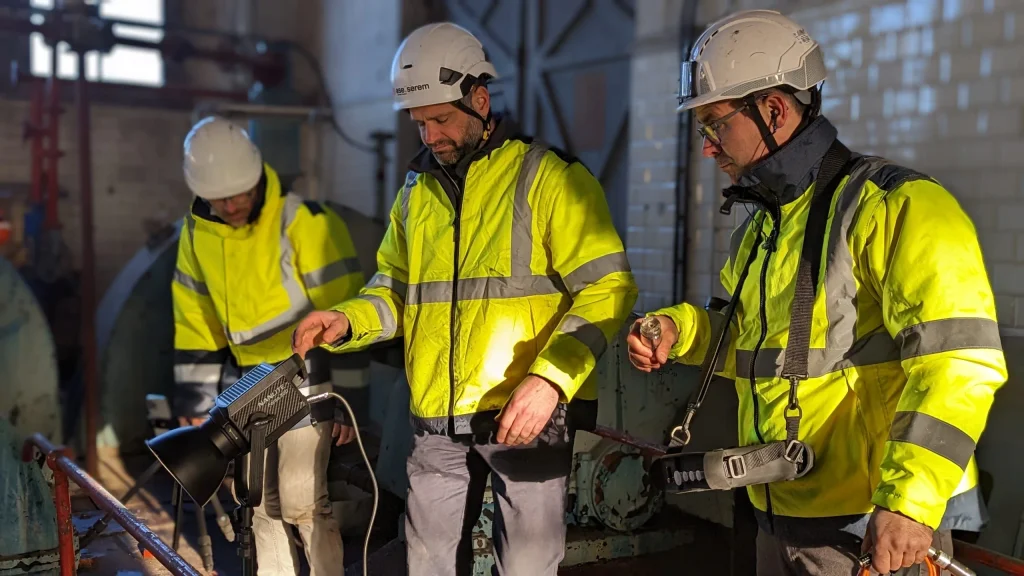
    From jll.spear to GOWell: asset integrity, by Sebastien Roche

    This article was first published in French: De l’innovation industrielle à l’intégrité des actifs.


  • Why I turned down my dream job and took the one nobody expected me to take

    As a kid, I had three professional convictions. The first was to become an engineer, a conviction I formed in middle school. The second was to become the CEO of a large group, which came a little later, in high school. The third was to gain international work experience, an ambition that grew during my engineering studies.

    In 2021, I announced that I was leaving Schlumberger (now SLB), while everything suggested I was steadily moving toward positions of major responsibility.
    After I announced my departure, the CTO at the time did me the honor of offering me a position I would not have turned down in other circumstances. That day, I declined the offer.
    I had made a deliberate decision to become an entrepreneur, something I had been thinking about for many years. It was irrevocable. It was the fourth time in my career that I had chosen not to follow the path laid out for me.

    It was also the one with the greatest impact, the one that made me realize I no longer wanted to follow a path shaped to carry me along, or to keep contributing to a corporate machine.

    The first time was in 1997. I was finishing at Gustave Eiffel, THE technical high school in Bordeaux, a factory for preparatory classes. My application to a PTSI preparatory class, the classic route to the French engineering schools, had been accepted. I chose the IUT route instead, while keeping my ambition of getting into Arts et Métiers.

    The second was in 1999: choosing an apprenticeship to earn my Arts et Métiers engineering degree. A choice of independence, a deliberate choice, which opened the doors of Ford, then the largest employer in the Aquitaine region. Ford is where my industrial DNA was built.

    In 2005, I was at the peak of my career plan as a young engineer, and everything was going my way. I landed a sought-after position as an integrator between Ford and Peugeot. At the same time, I had an intense desire to discover the world. I chose to resign and join Schlumberger, a discreet but very influential French company in the energy sector. I sold everything I owned, left with a single bag, and ended my journey in Grande Prairie, Alberta.

    At Schlumberger, I always said yes. I accepted every opportunity I was offered and gave my time and energy, in full workaholic mode. Back then, I told myself that the company and my managers knew what they were doing and knew how to develop their people. I was not disappointed. It was the right choice: it made me a seasoned manager with a strong sense of personal development and of business.

    Then my conviction changed. I wanted, and needed, to write my own path. I wanted to build something that reflected who I am, and who my friends are. That became jll.spear.

    Looking back, I notice that I seem to refuse roads I have not mapped out myself. Again and again, I have chosen to build the paths I take and to control where they lead, aiming for distant destinations that challenge my body and my mind.

    That is surely why I accepted the CTO position at GOWell. And yet I am an entrepreneur, in partnership with my best friends. A new road, a bridge to our future, a way to build ahead of our future needs.

    Life is made of opportunities and choices. What matters is to choose, and to stay in control of where you are going.

  • Choisir sans renoncer: my conversation with Laura Bokobza on decision-making

    I had the pleasure of taking part in Choisir sans renoncer (Choosing Without Giving Up), the podcast by Laura Bokobza dedicated to decision-making and the loneliness of leadership. We talked about my years at Schlumberger, my move into entrepreneurship, and how I make the call in critical moments, whether on an oil field site or within jll.spear. The episode is in French.

    About the podcast

    Choisir sans renoncer explores the moment just before a decision, when the ego argues, biases blur the signal, and choosing becomes a matter of leadership and strategy. The podcast alternates conversations with business leaders and solo episodes.

    About Laura Bokobza

    Laura Bokobza is a sparring partner for business leaders. She hosts Choisir sans renoncer and also offers decision-making coaching through LBK Consulting.

    Episode summary

    In this episode, I look back on my career and my approach to decision-making:

    • A bold path of decisions: from my 15 years at Schlumberger, with operations across 18 countries (00:56) to my move into entrepreneurship in Bordeaux with my childhood friends (01:23). I explain that I made the decision to leave my job years before acting on it, and prepared the transition carefully (17:45).
    • Decision-making and risk: my method for making the call under pressure, especially on oil field sites where the team’s safety was at stake (30:14). Once made, a decision must be irrevocable (00:04), but you have to listen to weak signals and to your own internal “sensor” (40:49).
    • Partnering with my peers: how jll.spear works, where major decisions are made unanimously, illustrated by a company acquisition called off on the day of signing, out of respect for the group’s shared culture (38:22).
    • Balancing work and family life: never fully separating career choices from family life, despite seven moves in fifteen years (01:13).
    • New horizons: accepting a CTO role in Singapore while remaining a partner in jll.spear, driven by a long-term growth opportunity (00:00 to 02:17).

    🧪 Decision-maker quiz (in French): lbkconsulting.fr/quizz-du-decideur

    🔗 Laura Bokobza on LinkedIn: linkedin.com/in/laurabokobza

    📷 Instagram: instagram.com/laurabokobza

    📬 Newsletter: Choisir sans renoncer on LinkedIn

    🌿 Website: lbkconsulting.fr

    ▶️ Listen to the full episode (in French): YouTube

  • What I take away from the loss of the Titan submersible

    Beyond the loss of life, and without getting into the debate over the resources involved, the loss of the Titan submersible reminds us that technical, technological or usage innovation must never come at the expense of its users’ safety.

    The exponential growth of digital startups and of #failfast has unleashed in us a desire to build companies at scale, and it allows us to challenge some established markets and ways of doing things.

    Overall, this is good news: it stimulates our creativity and our thirst for innovation, and even, when possible, for progress.

    There is, however, a fundamental difference between developing digital products for everyday use #digitalstartup and developing means of transport and technologies that could, for one reason or another, put their users’ lives at risk #industrialstartup.

    It is not unusual to hear so-called “disruptive” companies say they cannot comply with established standards because they cannot afford to, or because those standards slow them down.

    Let’s be clear: it would be fairly easy, for example, to build lighter and cheaper cars if we set aside all the safety rules that surround them.

    Industrial standards have often been established at the cost of the lives of the men and women who adopted certain technologies in their early days, the early adopters.

    The automobile, aviation and space exploration have also had their share of disasters.

    The fundamental difference is that at the beginning of the last century, we did not have the same experience, nor the same capacity for simulation, design and manufacturing.

    When most of the experts in the field tell you that you are putting your life, the lives of others and the reputation of an entire industry at risk, you have a duty to question yourself.

    The race to innovate must not become an excuse for the extravagant follies of those who have the means to do anything they like, especially when it only serves a new kind of tourism. You know who I mean; there are many of them.

    When you innovate, remember to surround yourself with experts, and remember to listen to them.

    Make sure your business plan includes at least some resources to size, simulate and test your products. In short, follow the standards, and at the very least buy a copy of the GDI (the Guide du Dessinateur Industriel, the French engineer’s reference handbook)!

    And be ready to walk away.